





Internal environment

In its broadest sense, the term ‘environment’ refers to all of the things around us. These things can affect our comfort, wellbeing, performance, behaviour, growth and development. In turn, our behaviour can impact on the environment around us.
The environment comprises the built environment and the natural environment. For more information see: Environment.
In the built environment, the phrase ‘internal environment’ typically refers to the environment that is created inside buildings or other enclosures. This is as opposed to the external environment, which comprises the environment outside buildings and other enclosures.
The internal environment might be formed by its:
- Size, form, layout, texture and so on.
- Acoustic environment.
- Visual environment.
- Thermal environment.
- Air quality.
This environment is created by the architecture of the building, including its fabric and systems, and as with the broader environment, it can affect our comfort, wellbeing, performance, behaviour, growth and development.
The phrase ‘internal environment’ can also be used to refer to the culture within an organisation, that is, the conditions, events, and policies that influence its activities and decision making. This might be affected by personalities, leadership styles, organisational structure, rewards structure, premises and so on.
[edit] Related articles on Designing Buildings Wiki
Featured articles
Check out some of the best features and news from Designing Buildings as well as key stories from around the web.
Building Safety Regulator, 19 August

Gill Kernick appointed Independent Chair of Residents’ Panel.
Connecting knowledge, technology and conservation
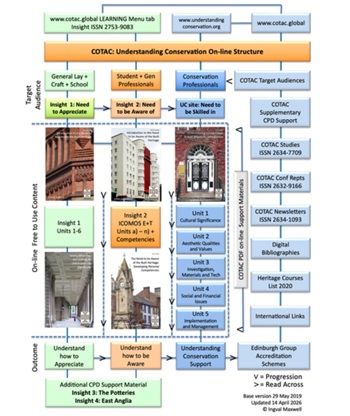
Building competence for the future of built heritage.
Building Regulations and Building Safety Act
CIOB publishes free advice for non-domestic clients.
Building Safety Newsletter from MHCLG.
An extraordinary record of steel engineering worldwide.
Households living near new pylons to save on bills.

ECA warns growth must not outpace grid capacity or skills.
The role of the client and decision making

CIOB response to built environment professions call for evidence.
Construction's sustainability reporting revolution
Tracking upfront embodied carbon with digital tools.
ECA welcomes procurement reforms

Public spending must back British jobs and skills.
Campaigning for Edinburgh: the Cockburn Association 1875-2049

The role of the civic voice in protecting character. Book review.

CIOB photography competition is open for entries.